
The Day the Phone Stopped Ringing
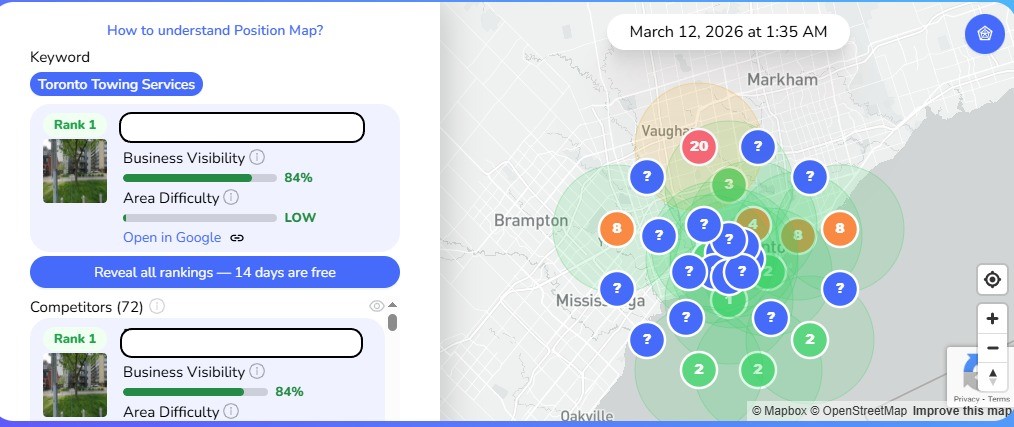
Imagine you are Domenic. (You can read the full data-driven breakdown in our Toronto Towing Case Study).
Domenic owns a towing company in a busy North American city. For ten years, Domenic was the king of the road. He had fifteen trucks, a team of drivers, and a website that sat comfortably at the top of Google. If you searched for “tow truck near me” at 3:00 AM, Domenic was the first thing you saw. He was getting 96 calls a month from Google alone.
Then, in 2026, something terrifying happened.
The rankings didn’t “drop.” Domenic wasn’t penalized. His website was still there. But the phone stopped ringing. In one month, those 96 calls plummeted to just three.
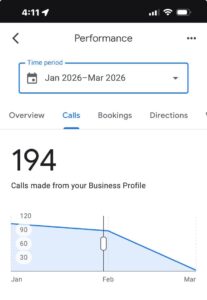
Domenic did what every business owner does: he called his SEO guy. The SEO guy told him, “Everything looks fine. Your backlinks are high. Your keywords are ranking.”
But he was invisible. Why? Because the search engine had changed from a Search Engine to an Answer Engine.

Google’s new AI Overview (SGE) had taken over the top of the screen. Instead of showing Domenic’s website, the AI was now answering the user directly: “You need a tow? Here are the three most trusted companies in your area with a 15-minute response time.”
His name wasn’t on that list. This is the difference between SEO and the new world of GEO (Generative Engine Optimization). At Go Rank High, we specialize in bridging this gap to protect business revenue in a zero-click world.
The Engineering of Search
When I look at Domenic’s problem, I don’t see a “marketing” failure. I see a structural engineering failure.
My background is in Engineering. I was trained to look at complex systems—like a bridge or a skyscraper—and understand how every piece connects to hold the weight of the structure. Search engines are no different. They are just giant, logical machines.
For twenty years, the “logic” of a search engine was simple:
- Keywords: Does the page have the word “towing”?
- Backlinks: Do other websites link to this page?
But in 2026, the machine has evolved. Google now uses Large Language Models (LLMs). These models don’t just “count” links; they understand relationships.
From “Strings” to “Things”
In the old days, Google looked for “Strings” (sequences of letters). Today, it looks for “Things” (Entities).
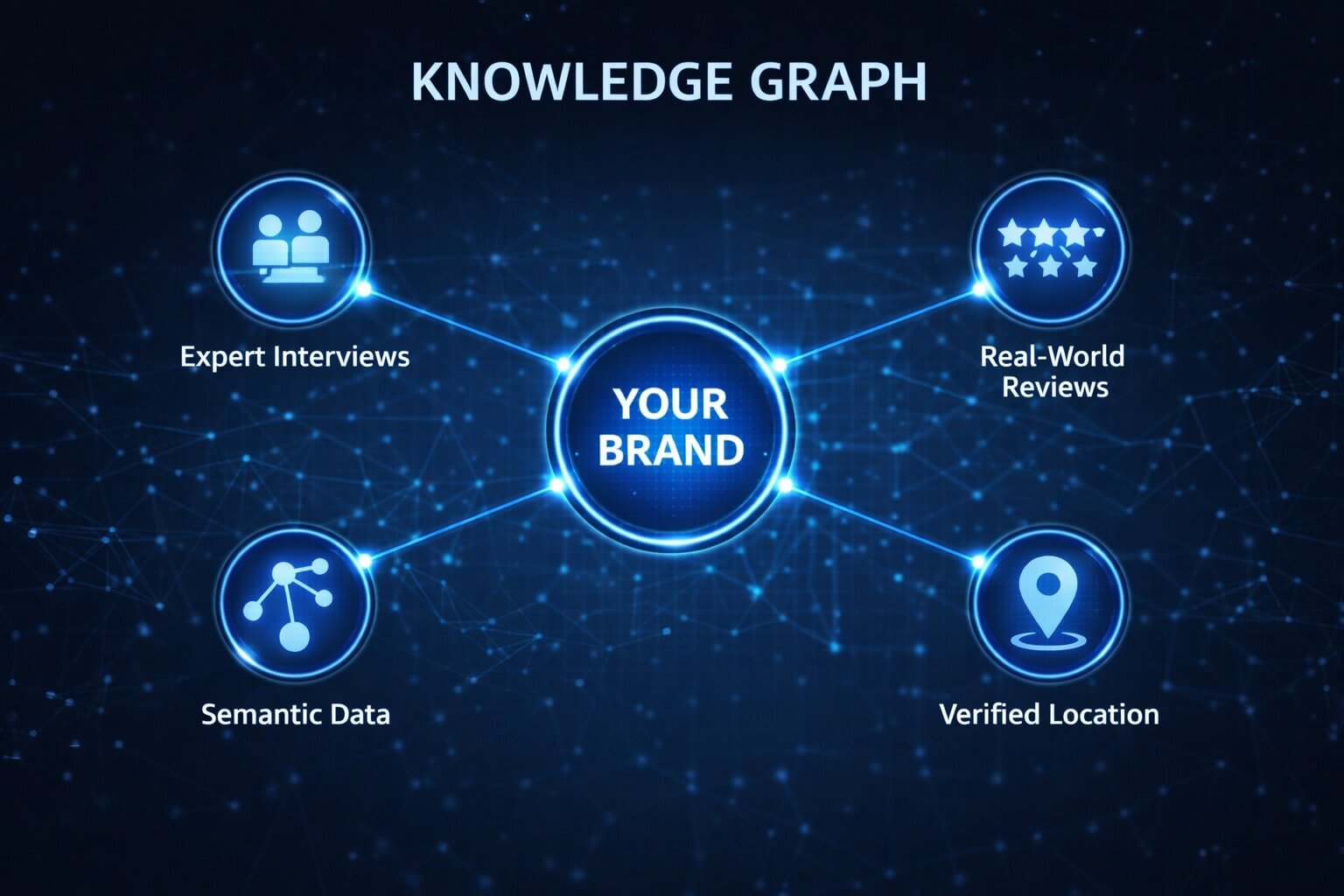
Think of an “Entity” like a file in a massive digital filing cabinet. Instead of a file for the word “Towing,” Google has a file for Your Brand. Inside that file, it looks for proof of your Expertise, Experience, Authority, and Trust (E-E-A-T).
If your website is just a bunch of keywords and some bought backlinks, your “Entity” file is empty. When the AI tries to answer a user’s question, it skips you because it doesn’t “know” who you are.
Why Backlinks Are No Longer the “Golden Ticket”
For years, SEO agencies told you that “Backlinks are the most important ranking factor.” In 2026, that is a dangerous lie.
Backlinks are like popularity votes. In a high school, the most popular kid isn’t always the smartest person to ask for medical advice. Google has realized this. In the era of AI, a link from a generic “blog” is worth almost zero. Why? Because AI can build links now. Spammers are using AI to create thousands of “authority” sites to sell links. Google knows this.
The Shift to “Citations” and “Information Gain”
Instead of looking for links, AI models look for Citations. A citation is when a reputable source mentions your brand as an expert. Even if they don’t link to you, the AI ‘sees’ the mention and adds a point to your authority score. This shift toward credibility is why human experience is now the ultimate search currency—a process we’ve documented in our E-E-A-T Content Checklist for outranking automated competitors.
This brings us to a concept our team talks about every day: Information Gain.
Google now rewards content that adds new information to the internet. If you write a blog post that says the same thing as the top ten results, the AI will ignore you. But if you provide a unique case study, a real expert interview, or a proprietary data point, the AI will cite you as its primary source.
The Strategy of Revenue
This is where I (Ammara) come in.
While our technical lead is building the foundation, I am focused on the Revenue. The biggest mistake I see companies make is chasing “Traffic.” Traffic is a vanity metric. If 1,000 people visit your site but nobody buys anything, you have a hobby, not a business.
Top, Middle, and Bottom of the Funnel (The Buyer’s Journey)
To win in the AI era, we have to map our content to the three stages of how people think:
- Top of Funnel (Awareness): A user asks, “Why is my car making a clicking sound?” (SEO Goal: Provide an answer so they remember your brand).
- Middle of Funnel (Consideration): A user asks, “Is it better to repair an old car or buy a new one?” (GEO Goal: Be the expert voice the AI uses to help them decide).
- Bottom of Funnel (Purchase): A user asks, “Who is the fastest emergency tow truck in Vancouver?” (Conversion Goal: Ensure your brand is the #1 recommendation from the AI).
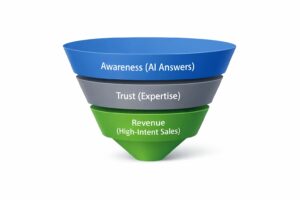
Most agencies only focus on the Top of the Funnel because it’s easy to get traffic there. At Go Rank High, we focus on the Bottom of the Funnel first. We want to find the people who have their credit cards out and are ready to solve a problem right now.
Rebuilding the Towing Company
Let’s go back to Domenic and his towing company. How did we fix his 3-call-per-month tragedy? We didn’t just “do SEO.” We used the Go Rank High Framework.
Step 1: Solving the Technical Semantic Gap
Taimoor went into the site’s code. He didn’t just add keywords; he implemented Advanced Schema Markup. Think of Schema as a “translator” for AI. It tells Google: “This isn’t just a paragraph; this is our specific service area, our current wait time, and a verified testimonial from a customer we helped yesterday.” This turned Domenic’s website from a static page into a “live entity” that the AI could understand.
Step 2: Extracting Expertise (The SME Interview)
Ammara interviewed Domenic’s head driver. I asked him, “What are the three most common mistakes people make when their car breaks down on the highway at night?”
We didn’t use AI to write the blog. We used Domenic’s 20 years of Experience. We wrote a guide titled: “The Highway Survival Guide: 3 Things to Do Before You Call a Tow.” Google’s AI loved this because it was Information Gain. It couldn’t find this specific advice anywhere else. Within weeks, the AI Overview began citing this guide as the “Standard Safety Procedure” for highway breakdowns in his city. Becoming a cited source is the new Page 1. To see exactly how Google selects these winners, see our guide on Winning the AI Overview.
Step 3: AEO (Answer Engine Optimization)
We looked at the “People Also Ask” boxes. People weren’t just searching for “towing.” They were asking: “How much does a tow cost for a Tesla?” or “Can a tow truck fit in a low-clearance parking garage?”
We created short, clear, 100-word “Answers” for every one of these questions. We structured them so the AI could easily “scrape” them.
The Result: Domenic became the “Answer” to every question related to towing in his city. His calls went from 3 to 120 per month—higher than they were before the AI update.
How to Audit Your Own Brand for the AI Era
If you are reading this in the USA or Canada, you are in one of the most competitive markets in the world. You cannot afford to wait. Here is the Go Rank High 5-Step Audit you can do today:
- The Perplexity Test: Go to Perplexity.ai or ChatGPT and ask: “Who are the top 3 [Your Service] providers in [Your City] and why?” If you aren’t on the list, you have a GEO problem.
- The Schema Check: Use Google’s Rich Results Test. Does your site have specific “LocalBusiness” or “Service” schema? If it’s empty, you are invisible to AI crawlers.
- The “Fluff” Audit: Look at your last three blog posts. Could an AI have written them? If the answer is yes, you are providing zero Information Gain.
- The Search Console Deep-Dive: Look at your queries. Are people finding you for “Questions” or just “Keywords”? If you aren’t answering questions, you aren’t winning the Answer Engine war.
- The E-E-A-T Proof: Does your “About” page show real humans, real degrees, and real years of experience? AI needs to see “Expertise” to trust you.

The Search Intelligence Briefing: Hard Truths About the AI Transition
We’ve recently spent time in the trenches with towing companies, helping them navigate these shifts. Here are the questions we get asked most often by founders who are tired of losing traffic to AI bots and want real answers.
How is GEO fundamentally different from the SEO tactics we’ve used for a decade?
Traditional SEO focuses on ranking in the blue list of links by using keywords and backlinks. You are essentially trying to win a popularity contest. GEO (Generative Engine Optimization) is fundamentally different. It focuses on your brand being cited as a trusted source within AI-generated answers. As a dedicated Generative Engine Optimization specialist, we help you move beyond simple ‘ranking’ to build a digital entity through semantic mapping and expert content that AI models are forced to respect.
The $10,000 Question: Is traditional SEO officially dead in 2026?
No. Traditional search still exists, but its real estate is shrinking every day. Think of SEO as the “foundation” of your house and GEO as the “structure.” SEO makes sure you are indexable and findable, but GEO is the layer that ensures your brand remains visible as Google moves toward a zero-click, AI-driven interface. You need both to survive, but only GEO will help you grow.
Why does Go Rank High focus exclusively on the US and Canada markets?
The North American market is the global “testing ground” for every new AI search feature. Competition here is at its peak, which means “basic” SEO tactics fail faster here than anywhere else. We focus our energy here because Taimoor’s engineering-led approach is specifically designed to handle the high complexity and extreme competition of the US and Canadian landscapes. If you can dominate here, you can dominate anywhere.
Moving beyond “Green Arrows”: How do we actually measure the ROI of GEO?
We’ve moved past vanity metrics. We look at Share of Model. Instead of just tracking where a keyword sits in a list, we track how often your brand is recommended by LLMs like ChatGPT and Gemini. Ammara ensures we track the quality of leads coming through “Answer-based” queries. If the traffic doesn’t turn into a phone call for a business, we don’t consider it a win.
Why is technical schema suddenly the “secret weapon” for AI visibility?
Absolutely. AI models are logical machines—they require structured data to understand the context of your business. Without advanced schema, an AI might know your website exists, but it won’t know your specific service hours, your real-time pricing, or your regional authority levels. Taimoor often notes that schema is the “nervous system” that allows the AI to actually feel and understand your brand.
What is “Information Gain,” and why is it the only way to beat AI-fluff?
Information Gain is the addition of unique, non-commodity information to the web. Google’s algorithms are now programmed to identify if your page is simply rehashing what everyone else already said. If you are just repeating facts, you are invisible. To rank, you must provide a fresh perspective, unique data, or the kind of expert insight we get from our human-led interviews.
The Future belongs to the Authorities
Search is no longer a game of “who can buy the most links.” It is a game of who is the most trusted expert.
Domenic the Towing Guy survived because he stopped trying to “trick” Google and started trying to “teach” Google’s AI why he was the best.
At Go Rank High, we bring 14 years of combined experience to solve this exact problem. Taimoor builds the engineering-grade technical structure. Ammara builds the revenue-driven content strategy. Together, we ensure your brand isn’t just a link in a list, but the definitive answer.
Is your brand an answer, or just a noise?