
The Content Crisis: Why the Internet is Feeling “Empty”
Have you ever searched for a solution to a problem and felt like you were reading the exact same article ten times in a row?
Since late 2023, the internet has been flooded with what we call “AI Slop.” Because AI is cheap and fast, millions of businesses are using it to pump out thousands of blog posts every week. These posts are grammatically perfect, but they have a massive problem: they are boring. They lack soul. Most importantly, they lack the one thing a machine cannot replicate: Real-World Experience.
For a business owner in the USA or Canada, this is a dangerous time. If you use AI to write your content, you are just adding to the noise. You are becoming a “commodity.”
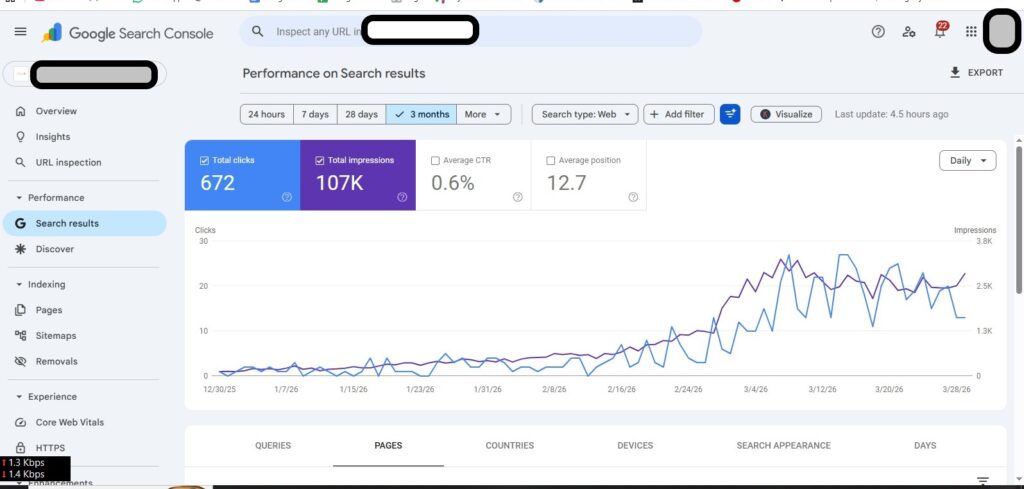
But there is a silver lining. Google and AI models like ChatGPT are getting smarter. They are now actively searching for first-hand human experience. At Go Rank High, we don’t just “write content.” We extract human wisdom. In this guide, we will show you the exact “Experience” blueprint we used to take a site in a saturated niche from zero to over 500+ monthly clicks in just 90 days.
The Strategy – Why AI is Losing the War on “Experience”
To understand how to win, you first need to understand the battlefield. As we explored in our GEO vs SEO Blueprint, Google uses a framework called E-E-A-T (Experience, Expertise, Authoritativeness, and Trustworthiness) to decide who gets to sit at the top of the search results.
What is E-E-A-T in SEO?
E-E-A-T is a set of guidelines Google uses to measure the quality of a webpage. It stands for Experience (first-hand involvement), Expertise (knowledge level), Authoritativeness (reputation), and Trustworthiness (honesty and accuracy).
Why “Experience” is the New Search Currency
AI is great at Expertise. It can summarize all the books in the world and tell you “how” to do something. But AI has no Experience. It has never actually sewn a dress, fixed a leaky pipe, or argued a case in court.
Taimoor, our technical lead, often points out that search is moving from a game of “who has the most keywords” to “who has the most unique data.” In the engineering world, we call this Information Gain.
The Concept of Information Gain
Information Gain is the addition of new, unique facts or perspectives to the internet that didn’t exist before. When you share a personal story about a mistake you made while running your business, you are providing Information Gain. Google’s algorithms are now programmed to reward this because it is something an AI simply cannot “hallucinate.”
The Case Study – Scaling 0 to 500+ Monthly Clicks in 90 Days
To prove that “Experience” beats “AI Volume,” let’s look at a real-world case study from our portfolio: The DIY Sewing and Crafting Niche.
The Challenge: Breaking Through a Saturated Market
We took over a site in the DIY space that was struggling. The sewing niche is incredibly competitive. You are up against massive websites that have been around for 20 years.
The site was trapped in a “Top of Funnel” cycle. It was writing broad articles like “What is a sewing machine?” While these got some impressions, they didn’t lead to sales or Demo sign-ups. The site lacked a clear Semantic Structure, causing it to be buried under established competitors.
Phase 1: Semantic Mapping & The Technical Overhaul
Our engineering team looked at this site from a structural perspective and realized the site wasn’t communicating ‘Authority’ to Google’s crawlers, which we solved by implementing our specialized Generative Engine Optimization framework.
We moved the strategy away from “Single Keyword” targeting. Instead, we built Semantic Content Hubs. We identified “Entities” related to specific high-end sewing machines and complex DIY patterns. By creating a “Topic Cloud” around these expert subjects, we signaled to Google that this site was a deep authority, not just a casual blog.
Phase 2: The “Experience Extraction” Process
While the technical structure was being built, Ammara, our strategic lead, focused on the content strategy. She realized that to beat the AI competitors, we had to find the “Hidden Knowledge” in the sewing world.
Our strategy involved interviewing real crafting experts. We didn’t ask them for keywords; we asked them about their frustrations. We asked about the “sound” a machine makes when the bobbin is jammed. We asked about the specific way a certain fabric feels under a 90/14 needle.
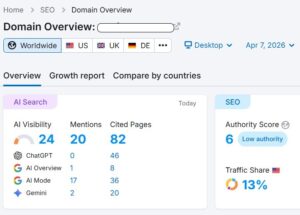
This is information an AI doesn’t know. We used these “nuggets of experience” to create content that was so unique that AI search models like Perplexity and Google SGE began citing our client as the primary source of truth.
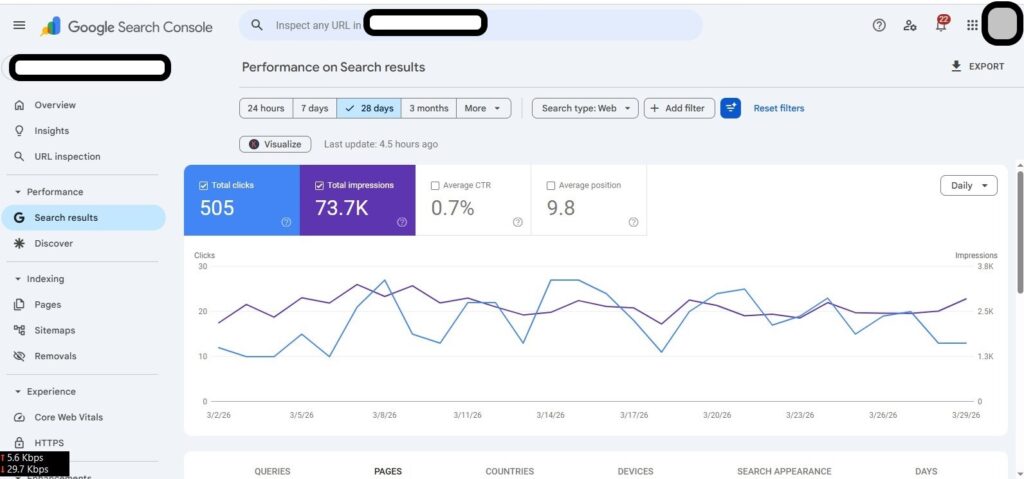
The Result: A 9.8 Average Position in 90 Days
By the end of the third month, the results were undeniable. We didn’t just get more traffic; we got better traffic.
The site moved from being “invisible” to having an Average Position of 9.8 across thousands of high-intent keywords. This is the power of blending technical engineering with high-level strategic expertise.
The Go Rank High E-E-A-T Checklist
How can you replicate this for your business? Whether you are a lawyer in Toronto, a SaaS founder in New York, or a local service provider, you can use this checklist to weaponize your experience.
1. The SME Interview (Experience Extraction)
Stop asking your writers to “research” a topic on Google. If they research it on Google, they will just rewrite what your competitors already said.
- Action: Have your strategist spend 15 minutes interviewing your internal Subject Matter Experts (SMEs).
- Goal: Find one thing that “everyone gets wrong” or one “pro tip” that only someone who has done the job would know.
2. Semantic Clustering (The Topical Moat)
Don’t write random blog posts. Build “Power Hubs.”
- Action: Identify your “Core Entity.” If you are a plumber, your core entity isn’t just “plumbing.” It’s “Emergency Pipe Repair,” “Water Heater Maintenance,” and “Drain Cleaning.”
- Goal: Build 10 supporting articles for every main service page. This creates a “Semantic Loop” that tells Google you are the ultimate expert in that niche.
3. AEO (Answer Engine Optimization) Formatting
To rank in AI Overviews and open-source AI platforms, your content must be easy for a machine to “scrape.”
- Action: Use a “Question-and-Answer” format inside your paragraphs.
- Goal: Put the question in an H3 and provide a direct, bolded answer in the first two sentences of the paragraph below it.
How do I rank in AI Overviews?
To rank in AI Overviews (SGE), you must provide a clear, direct answer to a user’s query within the first 100 words of your section. Use structured data (Schema) and ensure your brand is cited on reputable third-party sites to prove your authority. We have detailed the full technical logic Google uses for this in our Winning the AI Overview blueprint.
4. Technical E-E-A-T Proof
Google needs to see “proof” of who wrote the content.
- Action: Use Author Schema and detailed Author Bios.
- Goal: Don’t just say “Written by Admin.” Say “Written by [Name], who has 15 years of experience in [Industry].” Link this to a LinkedIn profile or a professional portfolio.
The Strategic Shift – From “Search Volume” to “Panic Intent”
Most people make the mistake of looking for keywords with the “highest search volume.” This is a mistake. High volume usually means high competition and low intent.
Our growth strategy focuses on Bottom of Funnel (BoFu) content. We look for “Panic Intent”—the moments when your customer has a problem that needs to be solved right now.
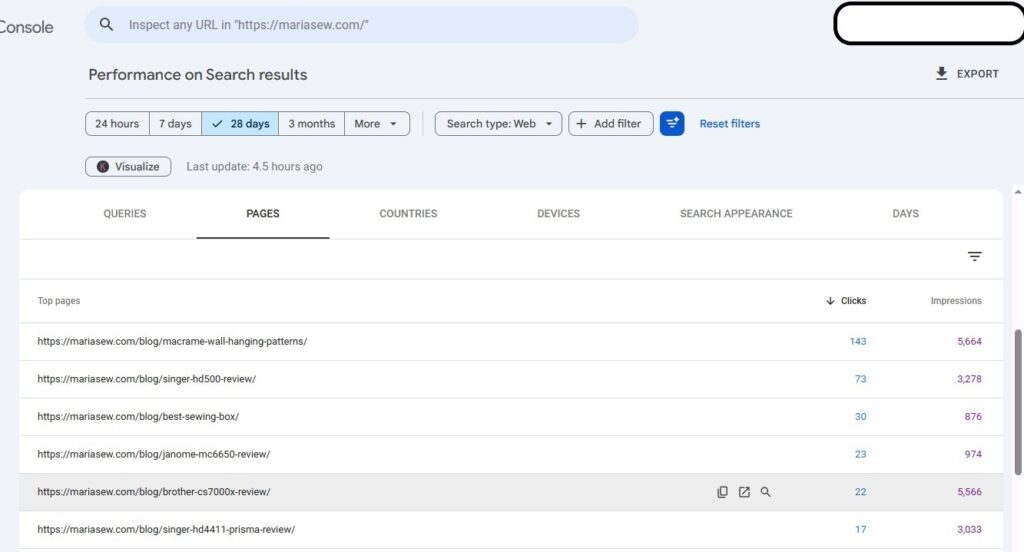
In our sewing case study, we didn’t just write about “how to sew.” We wrote about “how to fix tension on a specific machine model when the thread keeps snapping.” The person searching for that is frustrated and ready to listen to an expert. This is where the highest conversion rates live.
The Search Intelligence Briefing: Hard Truths About Human Content
In the era of AI, we get a lot of questions about how to stay relevant. Here is the Go Rank High perspective on the most common E-E-A-T queries.
Can I just “edit” AI-generated content to satisfy Google’s E-E-A-T requirements?
No. Simply “editing” AI content for grammar or style is not enough. To satisfy E-E-A-T, you must add Information Gain—which means adding new, unique data, personal stories, or expert opinions that the AI could not have known. Google’s algorithms are increasingly capable of detecting “rehashed” content. If you aren’t adding new value, your “edited” AI content will eventually lose its ranking.
Why did the DIY Sewing Case Study scale faster than traditional SEO methods?
The reason we saw 0 to 500+ clicks in just 90 days is that we didn’t wait for “backlinks” to build authority. Instead, we used Topical Authority and Semantic Clustering. By proving to Google that our site was the “definitive source” for specific sewing machine models through our engineering-led schema and expert-led content, Google rewarded us with a 9.8 average position across the board.
How does “Experience” protect my brand from being replaced by ChatGPT or Gemini?
AI models are “Parrots”—they can only repeat what they have been told. They cannot experience the world. By focusing your content on Human Experience, you are creating a “Moat” around your brand. When a user asks an AI for a recommendation, the AI will cite your brand because you have provided the unique, real-world data points that the AI needs to be accurate.
What is the most important technical signal for E-E-A-T in 2026?
Beyond high-quality content, Entity Verification is the most critical technical signal. This involves using advanced JSON-LD Schema to link your website to your social profiles, your professional certifications, and other reputable websites where your brand is mentioned. We specialize in this “Semantic Architecture” to ensure search engines see your brand as a trusted, verified entity rather than just another anonymous website.
Is it better to have a small amount of “Expert” content or a large amount of “AI” content?
Quality always beats quantity in the modern search era. A small “Content Hub” of 10 articles built from real Subject Matter Expert interviews will consistently out-convert and out-rank 1,000 pages of generic AI fluff. Google’s “Helpful Content” updates are designed to find and reward these “pockets of expertise” while de-valuing bulk-produced content.
How do we measure the “Experience” of a piece of content?
We use a metric called Information Gain Score. We analyze how much “new” information your page provides compared to the top 10 competitors already ranking for that term. If your page provides unique photos, proprietary data, or a contrarian expert opinion, your score is high. At Go Rank High, we aim for a high Information Gain score on every pillar piece we produce.
The Expert Always Wins
The search landscape of 2026 is no longer about who can write the most. It is about who can prove the most.
In the DIY Sewing niche, we proved that even a brand-new site can dominate a crowded market if it uses the right blueprint. We took a site that was “just another blog” and turned it into a cited authority for AI search engines in just three months.
At Go Rank High, we combine the precision of engineering with the strategy of revenue-driven growth.
- Our technical team builds the “Nervous System” of your site—the technical schema and semantic hubs that make you an authority.
- Our strategic team builds the “Heart” of your site—the expert-led stories and high-intent strategies that turn browsers into buyers.
Is your brand’s unique experience being buried by AI noise?