
A discovered currently not indexed fix is the most urgent tool in a business owner’s arsenal when their high-value content is stuck in the Google Search Console “Gray Zone.” In 2026, search engines have become much more selective. It is no longer enough to just write and publish a page; you must prove to the machine that your data is worth the cost of keeping it in the index.
When you open your dashboard and see that dreaded gray bar, it means Google’s crawlers found your URL, but the machine decided not to show it to the world. This isn’t a mistake or a bug in the system. It is a value decision made by an algorithm. For brands in the USA and Canada, where the fight for search real estate is intense, being stuck in this category is a direct leak in your revenue. If your pages aren’t live, they cannot rank, and they will never be used as a source for AI answers.
At Go Rank High, we view this “Discovered” status as a structural failure. If a page isn’t indexed, it effectively doesn’t exist. This guide provides the forensic blueprint to move your brand from “Discovered” to “Citable Authority.”
The GSC Gray Zone: Understanding the Value Threshold
In the earlier days of the internet, indexing was almost automatic. If you had a website, Google would eventually list your pages. But today, the landscape has changed. Google’s servers are expensive to run, so they now operate on what our technical team calls an “Energy Budget.”
The AI Quality Filter
Google handles billions of new pages every single day. Most of these pages are low-quality text generated by simple AI bots. To protect the search results, Google has created a “Quality Filter.” If a page does not provide enough Information Gain, it is put into the “Discovered – currently not indexed” pile to save space.
What is Information Gain?
Think of Information Gain as the “Newness” of your content. If your page says the exact same things as the top ten websites already on Google, the machine has no reason to index you. It already has that information. To get a discovered currently not indexed fix, you must provide something unique—like a real-world story, a custom chart, or an expert opinion that doesn’t exist anywhere else.
Crawl Budget and Technical Integrity
From a technical perspective, Google’s indexer is like a building inspector. If the building’s structure is weak or the rooms are empty, the inspector won’t give you a permit to open. Search engines look at your website’s “Structural Integrity” before they decide to index a new page.
The Machine-Readable Gap
Sometimes, a page isn’t indexed because the technical code is messy. If your site has broken navigation or missing “Schema” code, the AI crawler gets confused. It “Discovers” the link, but it can’t figure out exactly what you are selling or who you are helping.
Instead of trying to guess, the bot simply leaves the page in the “Discovered” category and moves on to a competitor with cleaner code. Our structural foundation focuses on fixing these hidden errors so the machine can read your site perfectly.
Why “Volume” No Longer Wins
While technical code is the “Nervous System” of your site, the content strategy is the “Heart.” Our strategy focuses on moving away from the old idea that “more pages equals more traffic.”
Moving to Buying Intent
Many websites are stuck in the gray zone because they are writing “fluff”—articles that don’t really help anyone make a decision. If you write a generic post about “What is SEO,” Google likely won’t index it because there are already a million better pages on that topic.
However, if you write about a specific problem your customers face—like “How to fix a Specific Model towing winch in a Toronto snowstorm”—you are providing valuable, rare information. This is the kind of E-E-A-T Content Strategy that makes Google want to index your page immediately. It sees that you are an expert and that your information is useful to people in the real world.
The 4-Step Forensic Discovered Currently Not Indexed Fix
If your pages are stuck, don’t just wait. Google might never come back on its own. You must force the machine to look at you again using this 4-step engineering framework:
1. The NLP Uniqueness Audit
Natural Language Processing (NLP) is how Google’s AI reads your writing. If your text sounds exactly like a generic robot, you will fail the filter.
- The Action: Add a personal story or a unique screenshot of your work.
- The Result: This proves a human wrote the page, which signals to Google that the content is worth indexing.
2. Semantic Internal Link “Pulling”
Think of your website as a map. A new page that isn’t indexed is like an island with no bridges. Googlebot can’t find its way there easily.
- The Action: Go to your most popular, already-indexed article. Add a link from that article to the one that is stuck in the “Discovered” zone.
- The Result: This “pulls” the Googlebot across the bridge to your new page, forcing it to notice the new content.
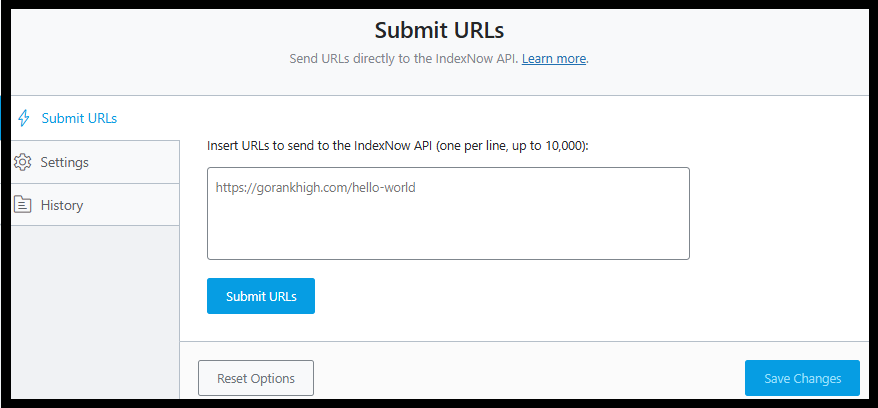
3. The Google Indexing API
Waiting for a normal crawl can take weeks. For high-stakes business owners, we use a technical “Fast Track.”
The Result: This tells the machine: “We have updated this page with important new data. Please index it right now.”
The Action: We use the Google Indexing API to send a direct alert to Google’s servers.
4. Technical Schema Verification
AI search models and Google need to “Verify” that you are a real expert.
- The Action: Fix your technical Schema code (JSON-LD). Make sure your author bio is linked to your professional profiles.
- The Result: This gives the machine the “Trust” it needs to give your URL the green checkmark.
Hard Truths on GSC Indexing
We deal with these technical issues for North American brands every day. Here are the answers to the questions we hear most often.
Why did my high-quality page get marked as “Discovered” instead of indexed?
In 2026, “Quality” is decided by a machine. Even if your writing is good, if your website lacks Topical Authority, Google will prioritize its budget for other sites. A discovered currently not indexed fix requires adding unique data points, real-world experience, or specialized technical code that sets you apart from the automated noise.
Does hitting the “Request Indexing” button in Search Console actually help?
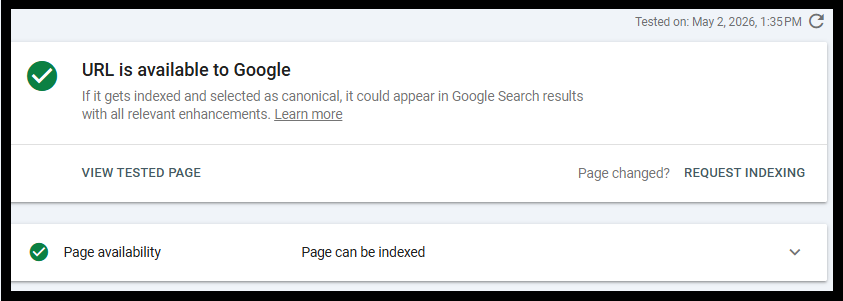
The button is a request, not a command. For many sites, Google ignores these manual requests if the site’s technical structure is messy. Instead of just clicking the button, focus on improving your internal links and making sure your site code is engineered correctly. Once the machine sees a logical structure, it will index your pages automatically.
Can a “Noindex” tag on a different page affect my overall indexing speed?
Yes, it can. If your site is cluttered with thousands of low-value, thin pages, you are wasting your “Crawl Budget.” By using a “Noindex” tag on useless pages and focusing Google’s energy on your best articles, you prove that your site is a high-density “Entity” of knowledge. This leads to faster, more reliable indexing.
How does my XML Sitemap affect the “Discovered” status in GSC?
A sitemap is only a suggestion, not a guarantee. If your sitemap includes “low-value” pages or broken links, Google may lose trust in your site’s structure. A proper fix involves cleaning your sitemap to ensure it only contains your highest-authority pages, making it easier for the machine to prioritize your best, most profitable content.
Can poor Core Web Vitals prevent Google from indexing my new pages?
Yes. Google views site speed and stability as a “Trust Signal.” If your page is technically heavy or slow to load, Google’s indexer may “discover” the URL but decide the “rendering cost” is too high to complete the indexation. We focus on optimizing these performance metrics to ensure your content passes Google’s technical threshold.
How long should I wait for a “Forensic Fix” to move a page out of the gray zone?
When using the Google Indexing API and correcting your technical structure, you can often see a move from “Discovered” to “Indexed” within 24 to 72 hours. However, for sites with deep structural damage or a history of low-quality content, it may take up to 30 days for Google to fully re-evaluate your brand’s authority.
Move from “Discovered” to “Cited”
In the era of AI-driven search, simply “existing” is not enough. To win, you must be Indexed, Retrieved, and Cited.
The ‘Gray Zone’ of Google Search Console is a sign of a website that hasn’t yet proven its structural or strategic value to the machine. By using an engineering-led approach to Technical Search Intelligence and focusing on unique human experience, you can turn your website into an authority that Google is forced to show at the top.
Is your best content being ignored by Google’s AI?