
A crawled – currently not indexed fix is the most urgent technical bridge a business owner must build when Google has visited their site but decided not to show it to the world. In the competitive search landscape of 2026, simply “writing good content” is no longer enough. Following the major quality updates released by Google, the machine has become a highly selective curator that uses a “Quality Gate” to decide which data is worth the cost of storage.
When you open Google Search Console and see the “Crawled – currently not indexed” status, it means the technical part of your SEO worked. Google found your page and read every word. However, the machine then made a conscious decision to reject it. For brands in the USA and Canada, this is a technical judgment of your authority. At Go Rank High, we view this status as a signal that your content hasn’t yet crossed the “Value Threshold.” This guide provides the forensic steps to move your brand from the “Rejected” pile into the live search results.

Why Google is Filtering Out “Good” Content
The hard reality of modern search is that “good” has become a commodity. With AI tools generating millions of pages every hour, Google has implemented a strict “Energy Budget.”
The Information Gain Requirement
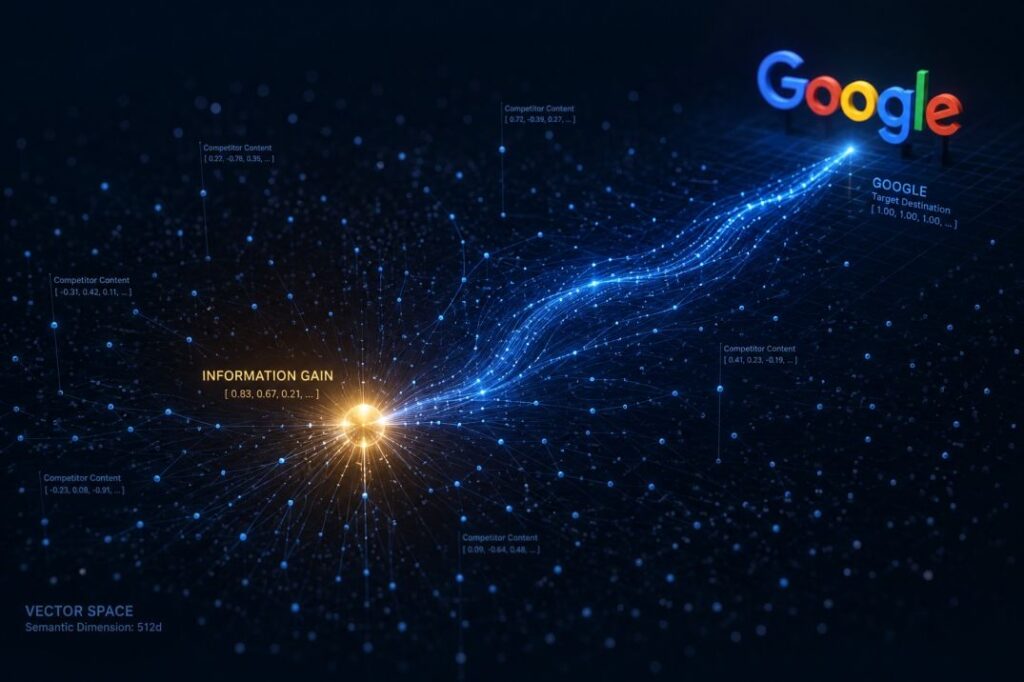
To trigger an automatic crawled – currently not indexed fix, your content must provide what we call Information Gain. If your article is just a better-written version of what your competitors already said, Google will crawl it but refuse to index it. There is no reason for the machine to store a duplicate idea. You must provide the “Missing Piece”—unique data, case studies, or expert opinions that only your team possesses. As we detailed in our E-E-A-T Content Strategy, human experience is now the only currency Google values over AI volume.
The Engineering Logic: Why Technical Cost Matters
From an engineering standpoint, indexing is an efficiency problem. Our technical lead, Taimoor, views every “Crawled” rejection through the lens of Structural Logic. Every time Google’s bot visits your site, it spends processing power. If your site’s technical architecture is heavy or your internal links are messy, the “Technical Cost” for Google to process your page increases.
Machine-Readable Authority
When the technical cost of a page is high and the unique value is low, Google places the URL in the “Crawled – not indexed” bucket to save its resources for better sites. Our technical framework focuses on removing this “noise.” We ensure your website’s structural foundation is so clean that Google can verify your authority in milliseconds. This engineering precision is why smaller, smarter brands are now out-indexing giant corporations.
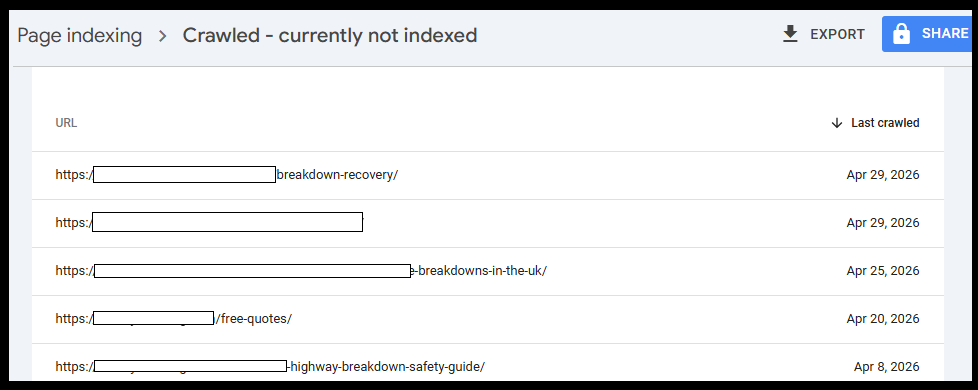
The 4-Step Forensic Crawled Currently Not Indexed Fix
If your money pages are being rejected, do not rely on the “Request Indexing” button. It is a manual request that is often ignored if the content doesn’t change. Follow this framework instead:
1. The Vector Contrast Audit
Google uses “Vectors” to mathematically measure how similar your content is to existing pages. If your content is too close to a competitor’s, you stay in the gray zone. We solve this by removing common industry “fluff” and replacing it with high-intent data points. By changing the mathematical “fingerprint” of the page, you prove to Google that your content offers a new perspective.
2. Semantic Internal Link “Heat”
A page often gets rejected because it is a “Digital Island.” If your site’s most authoritative pages (like your GEO vs SEO Blueprint) do not link to the new URL, Google assumes the new page isn’t important. By building a direct bridge from your top pillar to the rejected page, you signal that this new content is a vital part of your expertise.
3. Multimodal Signal Injection
Search assistants like ChatGPT and Google Gemini love “Multimodal” data. This means they want to see more than just text. By adding an original screenshot, a technical diagram, or a short expert video, you provide a “Hard Signal” of human effort. These signals are nearly impossible for AI bots to fake, which forces Google to recognize the page as a high-quality human asset.
4. Direct Indexing API Submission
Standard sitemap crawling is too slow for high-stakes business moves. We use the Google Indexing API via our technical Rank Math integration. This allows us to send an “Urgent” alert directly to Google’s servers. This tells the machine that the page has been updated with significant Information Gain and requires an immediate forensic re-scan.
Hard Truths on Indexing Quality
Why did Google crawl my 100% human-written page but refuse to index it?
Human words are no longer enough; Google requires human Experience. If your page lacks a unique angle or proprietary data that a machine cannot find elsewhere, Google will deprioritize it to save crawl budget. A successful crawled – currently not indexed fix requires adding specific “Nuggets” of info that set you apart from automated noise.
Can adding more backlinks to a rejected page help move it into the index?
Backlinks represent popularity, but indexation represents Quality. If your content is unoriginal, adding more links will only signal that people are pointing to a low-value page. You must first fix the Information Gain of the text itself before the algorithm will value the technical authority of your backlink profile.
Does technical schema really help with this specific Google Search Console error?
Yes. Schema is the “Nervous System” of your website. If your technical code is broken, Google’s bot gets confused about your brand’s authority. By implementing engineering-grade entity schema, we provide the “Verification” the machine needs to move your brand from the “Rejected” pile into the live search results and AI overviews.
How long does a “Forensic Fix” take to work for US and Canada brands?
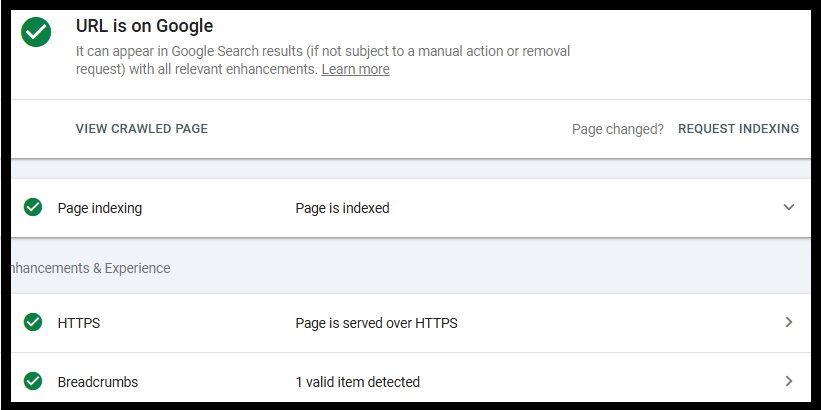
When our team applies the full framework—including the Indexing API and semantic structure updates—we typically see pages move to “Indexed” status within 48 to 72 hours. However, if a site has a long history of thin content, it may take 30 days of consistent Search Intelligence work to rebuild your digital trust.
Will this indexing issue affect my visibility in AI Overviews and ChatGPT?
Absolutely. AI retrieval engines (RAG) primarily read what is already present in the search index. If Google has rejected your page, AI assistants like ChatGPT will never find your expertise. Solving the “Crawled” gap is the mandatory first step if you want your brand to be cited as a trusted source of truth.
How do I know if my “Information Gain” is high enough for Google?
We measure this using a “Semantic Gap Analysis.” We compare your content against the top-ranking pages in the USA and Canada. If your page provides data, real-world case studies, or expert quotes that the others lack, your Information Gain is high, and Google will prioritize your indexation.
Reclaiming Your Authority
Search is no longer a game of “who can buy the most links.” It is a game of who is the most trusted expert.
Domenic the Towing Guy survived because he stopped trying to “trick” Google and started trying to “teach” Google’s AI why he was the best.
At Go Rank High, we bring 14 years of combined experience to solve this exact problem. Taimoor builds the engineering-grade technical structure. Ammara builds the revenue-driven content strategy. Together, we ensure your brand isn’t just a link in a list, but the definitive answer.
Is your brand an answer, or just a noise